
In the competitive 2026 California real estate landscape, the “45-day clock” has become the primary point of failure for even the most seasoned investors. With inventory levels in the Bay Area specifically in Vallejo, Contra Costa, and Solano often struggling to keep pace with demand, the 45-day identification period is less of a timeline and more of a high-stakes sprint.
This deep-dive is a critical component of The Definitive Guide to California 1031 Exchanges (2026 Edition), designed to give you the tactical edge needed to secure a replacement property before the IRS and the California Franchise Tax Board trigger a taxable event.
The 45-Day Identification Rule: A Non-Negotiable Deadline
The 45-day identification rule mandates that a taxpayer must identify potential replacement properties in writing within exactly 45 calendar days of closing the sale of their relinquished property.
Technical Nuance: The IRS does not grant extensions for weekends, holidays, or even natural disasters unless a specific federal disaster relief notice is issued. In the 2026 market, where “days on market” for prime industrial or multifamily assets in Solano County can be as low as 15–20 days, waiting until Day 1 to begin your search is a recipe for disaster.
Strategic Rules for Property Identification
Investors typically utilize one of two primary rules to identify their replacement assets. Choosing the right one depends entirely on your portfolio goals and the current inventory in the East Bay or North Bay markets.
1. The Three-Property Rule
The most common strategy is identifying up to three properties of any fair market value. In a tight market like Contra Costa, this is often the safest bet. You identify your “Plan A” and two viable backups.
2. The 200% Rule
If you are looking to diversify into a larger portfolio (e.g., exchanging one large Oakland asset for several smaller properties in Vallejo), the 200% rule allows you to identify any number of properties, provided their combined fair market value does not exceed 200% of the value of the property you sold.
Navigating 2026’s Inventory Crunch: Tactical Strategies
Generic tax sites often overlook the reality of the 2026 California market. Here is how sophisticated Bay Area investors are successfully navigating the identification window right now:
Utilize the “Pocket Listing” Network
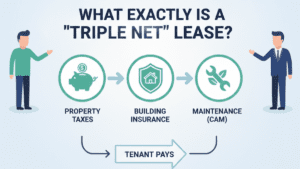
In submarkets like Solano County, the best replacement assets—especially NNN (Triple Net) retail or industrial flex space—never hit the public MLS. Working with a broker like Brian Baniqued at BCRE provides access to off-market inventory, allowing you to identify assets that aren’t being bid up by the general public.
The DST “Safety Net”
A Delaware Statutory Trust (DST) is an institutional-grade, fractional ownership structure that qualifies for 1031 treatment.
- The Strategy: Identify a DST as your third property on your 45-day list.
- The Benefit: If your primary choice in Vallejo falls through during due diligence on Day 50, you can immediately close on the DST. It serves as a guaranteed “backstop” to ensure you don’t lose your tax-deferred status.
Parallel Tracking
In a tight market, you must be under contract on your replacement property before you even close the sale of your relinquished property. This “parallel tracking” essentially expands your 45-day window into a 90-day window by utilizing the pre-closing period.
People Also Ask (2026 SEO Optimization)
- Can I change my 1031 identification list after 45 days? No. Once the 45th day passes at midnight, your list is “frozen.” You cannot add, swap, or modify properties. You can only acquire what is on that specific list.
- What happens if my identified property in Contra Costa sells to someone else? This is the “1031 Nightmare.” If you only identified one property and it sells to another buyer, your exchange fails, and you will owe capital gains and depreciation recapture taxes. This is why the Three-Property Rule with a DST backup is the gold standard for 2026.
- Does the California FTB have different identification rules? California generally follows federal IRC §1031 guidelines regarding timelines. However, remember that the FTB Clawback Provision requires you to report these identified out-of-state properties on Form 3840 if you move equity out of California.
The Local Nuance: Why Vallejo and Solano Matter
As we navigate 2026, the Vallejo and Solano corridors are seeing a “flight to value.” Investors are exchanging out of lower-cap-rate assets in San Francisco into higher-yield industrial and medical office spaces in the North Bay.
However, because these markets are smaller, the “tightness” is amplified. A single large exchange can temporarily dry up the available B-class multifamily inventory in Vallejo. Successful navigation requires a broker who understands the zoning shifts and Title 24 energy compliance issues that can stall a closing and blow your 180-day window.
Summary Checklist for the 45-Day Window
- Day -30: Engage a Qualified Intermediary (QI).
- Day -15: Start the search in Vallejo, Contra Costa, and Solano.
- Day 0: Close on your relinquished property. The clock starts.
- Day 20: Have at least two properties under LOI (Letter of Intent).
- Day 44: Submit your formal identification letter to your QI. Do not wait until Day 45.
Secure Your 1031 Exchange Today
The difference between a successful tax-deferred exchange and a massive tax bill often comes down to the quality of your team. In a 2026 market defined by low inventory and high competition, you cannot afford to “guess” your way through the identification period.
Brian Baniqued and the team at BCRE specialize in navigating the architectural complexities of California 1031 exchanges. From sourcing off-market assets in Solano County to structuring DST backups, we ensure your equity remains protected and your portfolio continues to scale.
Take the Next Step
Contact Brian Baniqued at BCRE today for a comprehensive 1031 strategy consultation. Let us help you navigate the 45-day rule with confidence and precision.