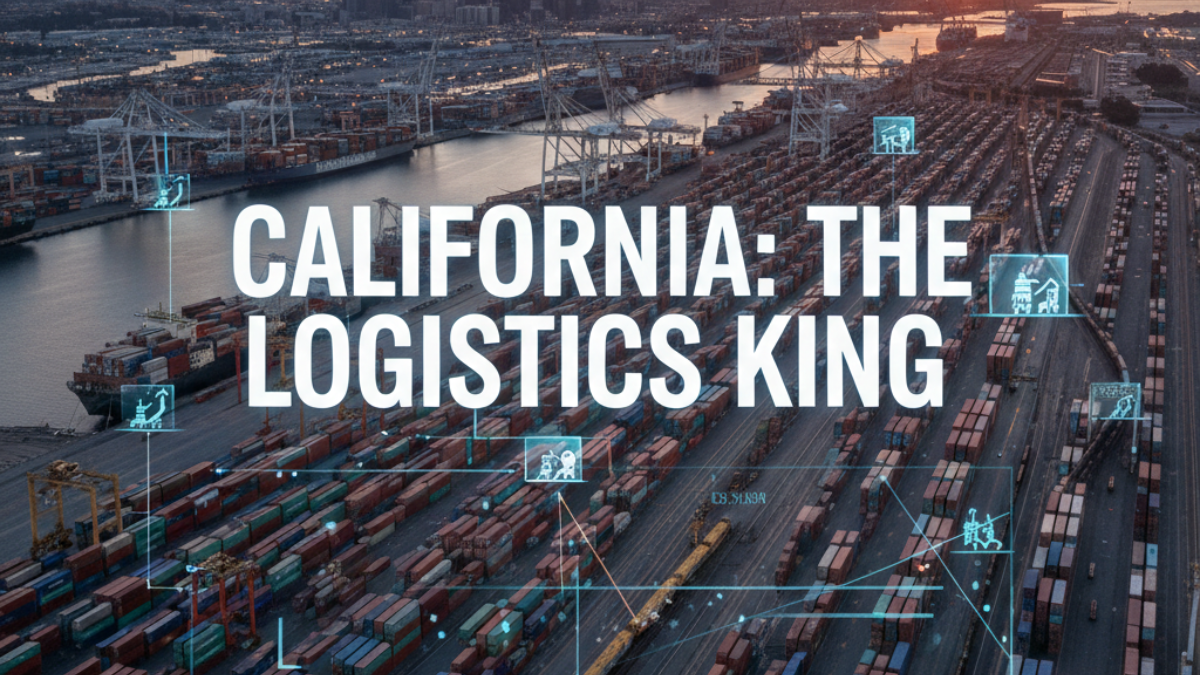
The Ports of Los Angeles and Long Beach (the San Pedro Bay Port Complex) are the primary engines of the U.S. economy. As of 2026, these “twin ports” remain the busiest in the Western Hemisphere, handling nearly 40% of all containerized imports entering the United States.
Here is why this massive infrastructure makes California the undisputed “Logistics King” and what it means for your real estate strategy.
1. The Gateway to the Pacific Rim
California’s geographic advantage is its greatest asset. The San Pedro Bay ports serve as the direct link between North American consumers and Asian manufacturing giants in China, Vietnam, and South Korea.
-
The Volume: In 2025, the Port of Long Beach processed a record-breaking 9.9 million TEUs (Twenty-foot Equivalent Units), while the Port of Los Angeles consistently moves over 10 million TEUs annually.
-
The Velocity: For goods coming from the Pacific, landing in California is significantly faster than sailing through the Panama Canal to the East Coast. This “speed-to-market” is why major retailers like Amazon, Walmart, and Target anchor their supply chains here.
2. The Infrastructure Ripple Effect
The ports don’t operate in a vacuum. Their presence has forced the development of a massive, interconnected logistics network that investors can leverage:
-
The Alameda Corridor: A 20-mile “expressway” for trains that whisks cargo from the docks directly to the transcontinental rail yards near downtown LA.
-
Inland Connectivity: This port activity is the direct driver of the Inland Empire’s industrial boom. Goods move from the ships to massive distribution centers in Riverside and San Bernardino before being shipped to the rest of the country.
-
The Jobs Engine: Port activity supports over 2.7 million jobs nationwide and contributes more than $300 billion to the U.S. GDP.
3. Resilience and the “Year of Transition” (2026)
While global trade faced uncertainty in 2025 due to shifting tariffs and geopolitical tensions, the California ports have shown incredible resilience. 2026 is being dubbed a “year of transition” as the ports pivot toward:
-
Zero-Emissions Goals: The ports are investing billions into the Green Shipping Corridor, aiming for 100% zero-emission cargo handling by 2030.
-
Technological Supremacy: From AI-driven yard management to automated cranes, these ports are becoming “smart hubs” that reduce the logjams we saw in previous years.
Connecting the Dots for Investors
If you own or are looking to buy industrial property in California, the ports are your primary “demand driver.”
When port volumes are high, demand for the Big 4 of Industrial Real Estate ,especially warehouses and cold storage , skyrockets. More containers mean more stuff that needs to be sorted, stored, and shipped. This constant flow ensures that vacancy rates stay low and rents remain some of the highest in the country.