
In the high-stakes landscape of California commercial real estate, the IRC §1031 exchange remains the most potent tool for wealth preservation and portfolio scaling. However, as we enter 2026, the intersection of federal tax law and the California Franchise Tax Board’s (FTB) stringent “clawback” regulations requires a sophisticated architectural approach to divestment.
For investors navigating the Bay Area’s evolving sub-markets from the industrial hubs of Vallejo to the multifamily corridors of Contra Costa and Solano understanding the 2026 regulatory environment is not just an advantage; it is a necessity.
Table of Contents
-
The Core Mechanics of a 1031 Exchange
-
California-Specific Regulations: The FTB Factor
-
The “Clawback” Rule & Out-of-State Exchanges
-
Bay Area Market Focus: Vallejo, Contra Costa, and Solano
-
2026 Outlook: Market Trends & Interest Rate Shifts
-
Advanced Exchange Structures: DSTs and Reverse Exchanges
-
Checklist for High-Net-Worth Investors
1. The Core Mechanics: What is a California 1031 Exchange?
Direct Answer: A California 1031 Exchange allows real estate investors to defer capital gains and depreciation recapture taxes by reinvesting the proceeds from a sold “relinquished” property into a “like-kind” replacement property. To qualify, the investor must identify replacement assets within 45 days and close within 180 days.
While the federal guidelines provide the framework, California’s application of these rules is notoriously rigid. For a successful deferral, the “Like-Kind” requirement in 2026 continues to be broad: you can exchange a Vallejo warehouse for a Walnut Creek medical office, provided both are held for investment or business use.
The Timeline Constraints
- Day 0: Close of escrow on the relinquished property.
- Day 45 (Identification Period): You must formally identify up to three potential replacement properties in writing to your Qualified Intermediary (QI).
- Day 180 (Exchange Period): You must close on one or more of the identified properties.
2. California-Specific Regulations: The FTB and Form 3840
Direct Answer: Beyond federal reporting, California requires investors to navigate FTB Form 3840. This form tracks deferred gains on California-sourced property. If you exchange a California asset for out-of-state property, you must file this annually to inform the FTB that the gain remains deferred and has not yet been “cashed out.”
California’s Franchise Tax Board (FTB) is among the most aggressive state tax agencies in the nation. Even if you move your residency to a tax-free state like Nevada or Texas, the California-sourced gain follows you until a taxable event occurs.
Key California Compliance Forms
| Form Number | Name | Purpose |
| FTB 3840 | Like-Kind Exchange Information Return | Tracks deferred gains when California property is exchanged for out-of-state property. |
| FTB 593 | Real Estate Withholding Statement | Manages the mandatory 3.33% withholding on California real estate sales (unless exempt). |
| IRS 8824 | Like-Kind Exchanges | The federal form used to report the exchange to the IRS. |
3. The “Clawback” Rule & Out-of-State Exchanges
Direct Answer: The California Clawback Rule mandates that any capital gains deferred from the sale of a California property remain taxable by California, even if the replacement property is located in another state. When that final out-of-state property is eventually sold without another exchange, California “claws back” its share.
For high-net-worth (HNW) investors, this is often the “poison pill” of geographic diversification. If you sell a portfolio in Solano County and buy in Florida, the FTB expects an annual check-in (Form 3840).
Expert Note: The only way to permanently avoid the clawback is through a “Swap ’til you Drop” strategy, where the property is held until the investor’s death, allowing heirs to receive a step-up in basis to fair market value.
4. Bay Area Market Focus: Vallejo, Contra Costa, and Solano
Direct Answer: In 2026, the North and East Bay sub-markets offer unique “value-add” opportunities for 1031 investors. Vallejo’s industrial waterfront, Contra Costa’s multifamily stability, and Solano’s logistics corridors provide a hedge against the higher volatility seen in the San Francisco and Oakland urban cores.
Sub-market Analysis
- Vallejo (Solano County): As San Francisco remains in a “reset” phase, Vallejo has become a primary target for industrial redevelopment. Investors are utilizing 1031 proceeds to acquire aging maritime or warehouse assets to capitalize on the region’s lower entry costs and transit connectivity.
- Contra Costa County: Communities like Concord and Walnut Creek are seeing a flight to quality. Professional investors are exchanging out of high-maintenance C-class assets in Oakland into B+ or A- multifamily assets in Contra Costa to capture stable commuter demand.
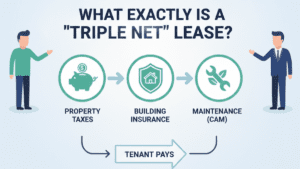
- Solano County Logistics: With the continued expansion of the I-80 corridor, Solano is the “relief valve” for Bay Area logistics. Triple-net (NNN) leased properties here are highly sought after as 1031 replacement assets for those seeking passive income.
5. 2026 Outlook: Market Trends & Interest Rate Shifts
Direct Answer: The 2026 California 1031 outlook is defined by “The Great Stabilization.” After the volatility of 2024-2025, interest rates have leveled, allowing for more accurate cap rate projections. Investors are currently prioritizing Reverse Exchanges to secure scarce high-quality inventory before selling their relinquished assets.
2026 Real Estate Climate
As of Q1 2026, we are seeing:
-
Inventory Scarcity: High-quality NNN assets in the Bay Area are trading at compressed cap rates despite higher borrowing costs.
-
Title 24 Compliance: California’s strict energy codes (Title 24) are impacting exchange valuations. Investors are increasingly looking for replacement properties that are already compliant to avoid immediate post-acquisition capex.
-
The Rise of DSTs: Delaware Statutory Trusts have reached record adoption in California as “backup” ID options to ensure 1031 compliance when primary property deals fall through.
6. Advanced Structures: DSTs and Reverse Exchanges
Direct Answer: Advanced 1031 strategies like Delaware Statutory Trusts (DSTs) and Reverse Exchanges are essential in a tight market. A DST allows for fractional ownership in institutional-grade real estate, while a Reverse Exchange allows an investor to buy the replacement property before selling their current one.
Comparison: Standard vs. Reverse vs. DST
| Feature | Standard (Delayed) | Reverse Exchange | DST (Fractional) |
| Sequence | Sell then Buy | Buy then Sell | Sell then Invest |
| Closing Risk | High (45-day ID) | Low (Asset secured) | Low (Pre-packaged) |
| Management | Active | Active | Passive (Hands-off) |
| California Tax | Deferred | Deferred | Deferred |
7. Checklist for High-Net-Worth Investors
Direct Answer: A successful 2026 exchange requires a specialized team: a Qualified Intermediary (QI) with California expertise, a tax attorney familiar with FTB sourcing rules, and a commercial broker with deep submarket data in Solano or Contra Costa. Early engagement is the only way to mitigate the 45-day ID risk.
Pre-Exchange Action Items:
- Engagement: Contract a QI before closing the sale of the relinquished property.
- FTB Strategy: Review Form 593 exemptions with your CPA to avoid the 3.33% “cash grab” at escrow.
- Inventory Scan: Begin scouting Vallejo, Solano, and Contra Costa markets 60 days before listing your property.
- Basis Tracking: Ensure your accounting team is tracking “California Basis” vs. “Federal Basis,” as they often diverge.
The landscape of California 1031 Exchanges in 2026 is complex, but for the disciplined investor, it remains the premier vehicle for building a Bay Area real estate empire. By respecting the FTB’s boundaries and leveraging the growth in Solano and Contra Costa, you can turn tax liabilities into acquisition power.