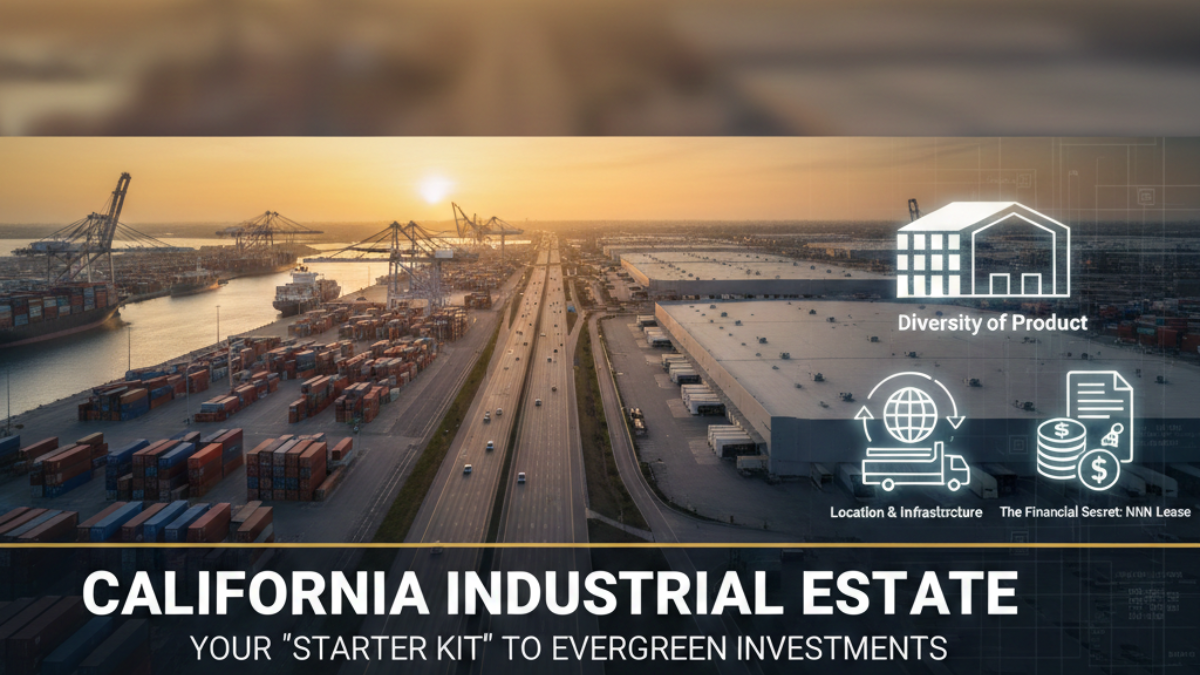
In the world of commercial real estate, California isn’t just a market , it’s an engine. Whether it’s the massive container ships visible from the Long Beach shoreline or the sprawling distribution centers in the Inland Empire, the Golden State’s industrial sector remains the “Evergreen” choice for serious investors.
If you are looking to build a portfolio that stands the test of time, you need a firm grasp of the basics. This is your “Starter Kit” to understanding the fundamentals of California industrial real estate.
1. Diversity of Product: Finding Your Niche
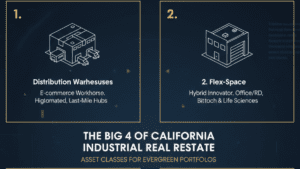
Not all industrial buildings are created equal. To the untrained eye, they may all look like “big grey boxes,” but their functions vary wildly. In California, we typically categorize the market into four primary types.
Knowing which one fits your investment goals is the first step toward success.
Want a deeper dive into the specs? Check out our guide on The Big 4 of Industrial Real Estate: Warehouses, Flex-Space, Manufacturing, and Cold Storage.
2. Location & Infrastructure: The Port Powerhouse
Why is California consistently ranked as the top industrial market in the nation? It comes down to one word: Logistics. California serves as the primary gateway for goods entering North America. The proximity to the Ports of Los Angeles and Long Beach creates a “ripple effect” of demand. When those ports are busy, every warehouse within a 100-mile radius becomes more valuable. Understanding this supply chain is vital for predicting which sub-markets (like the Inland Empire or Orange County) will see the next rent spike.
Discover the mechanics behind the “Logistics King” in our post: Why California is the “Logistics King”: The role of the Ports of LA and Long Beach.
3. The Financial Secret: The NNN Lease
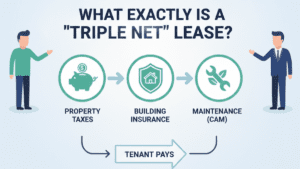
For many landlords, the biggest draw of industrial real estate isn’t just the demand—it’s the lease structure. In California, the “Triple Net” (NNN) lease is the industry standard. Unlike residential real estate, where a landlord might have to pay for a leaky roof or rising property taxes, the NNN lease shifts these costs to the tenant. This creates a “passive” income stream that is highly attractive to hands-off investors and those looking for stable, long-term returns.
New to commercial leasing? Read our simple breakdown: Understanding NNN Leases: A guide to “Triple Net” leases and why landlords prefer them.
Why This Matters Now
As we move through 2026, the demand for “last-mile” delivery and advanced manufacturing continues to outpace supply. By mastering these three pillars—Product Type, Logistics, and Lease Structure , you aren’t just buying a building; you’re investing in the backbone of the global economy.